SOHO
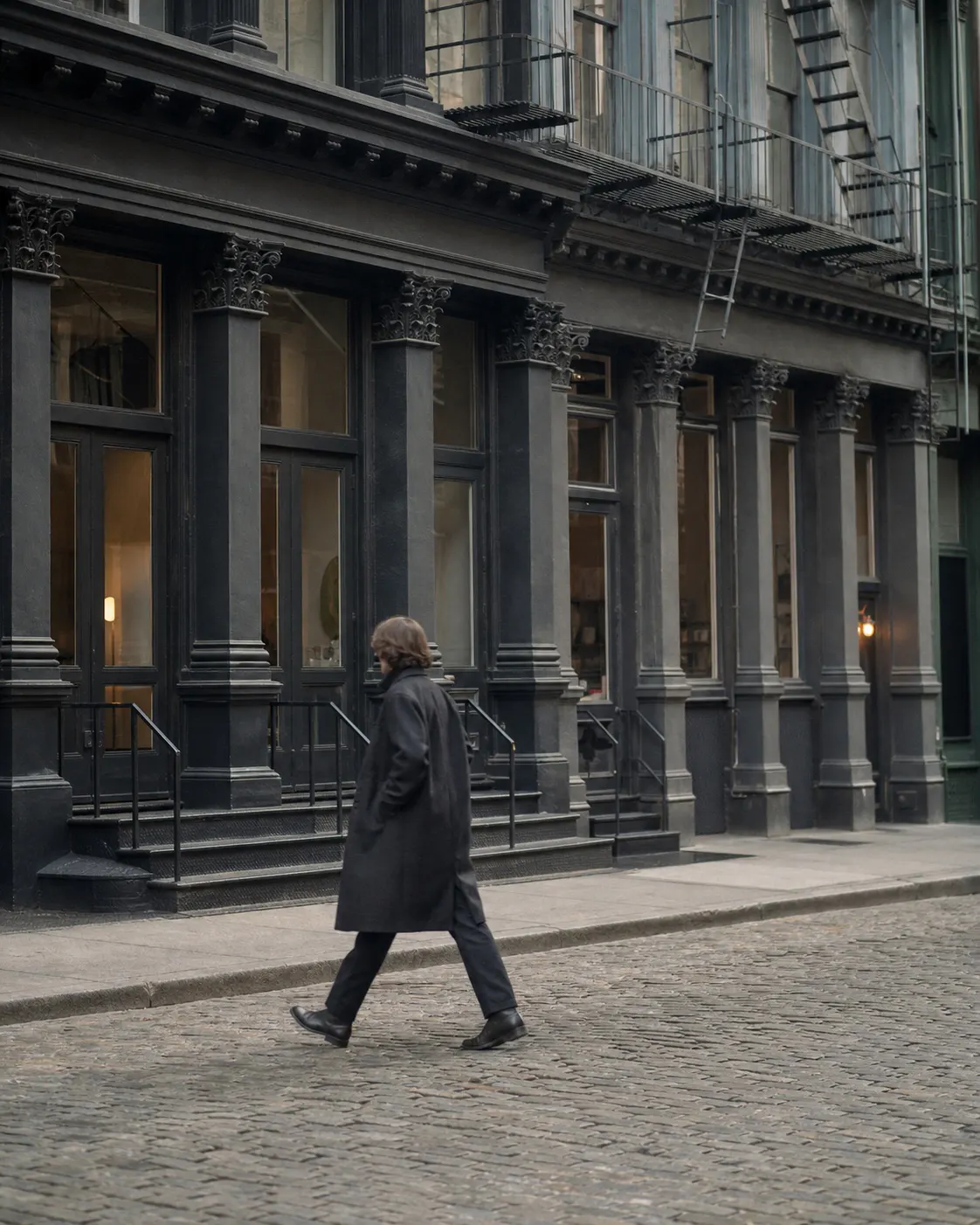
The first thing SoHo offers is the order of its cast-iron façades. Tall windows, slender columns, fire escapes, and cobbles repeat from block to block, sharpening both clothes and posture. Storefronts and pedestrians keep passing through, so the photographs never lose the movement of a New York street.
- BEST TIME
- Avoid Weekend Afternoons
- DURATION
- 50–75 MIN
- CHARACTER
- Editorial / Fashion / Architecture / Street
- COORDINATES
- 40.7233, -74.0030
Loft buildings line Greene, Wooster, Mercer, and Prince Streets. Their cast-iron parts were manufactured in sections, which is why neighboring façades echo one another in columns, window bays, and cornices without being identical. A person standing among them enters a rhythm already built into the street.
Greene Street draws the eye into a long perspective. Wooster brings cobbles, fire escapes, and a stronger trace of the old industrial district; Mercer is wider, with newer storefronts reflecting the street. Moving between the three works better than asking one corner to produce every kind of photograph.
Morning leaves the street lines most legible. On an overcast day, iron, brick, and glass retain their detail without the severe contrast of a narrow urban canyon. Afternoons and weekends are busier and can suit documentary photographs, but no time of day comes with a promise of an empty SoHo.
Greene Street — Cast-iron façades and long perspective · Wooster Street — Cobbles, fire escapes, and industrial texture · Mercer Street — Wider street, reflective storefronts, and contemporary frames
From SoHo, continue west for the smaller residential scale of the West Village, or east for the denser street life of Chinatown.