LOWER EAST SIDE
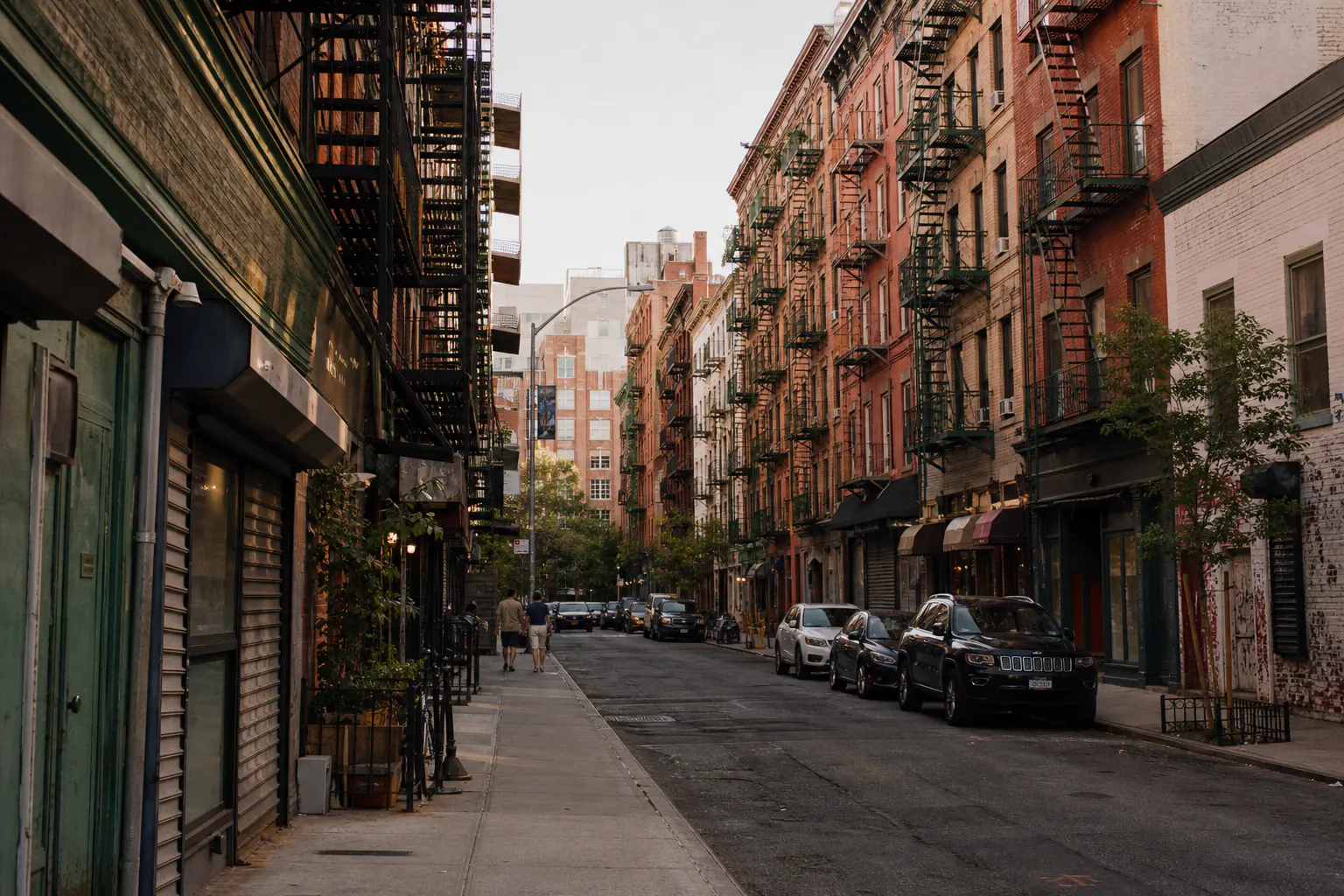
The eras of the Lower East Side have not been arranged into separate rooms. Brick walls, fire escapes, and dense storefronts preserve the bones of immigrant housing, while galleries, restaurants, and night lights have grown among them. It is rougher than the West Village and distinct from Chinatown in its focus on tenement architecture and contemporary street culture.
- BEST TIME
- Afternoon
- DURATION
- 50–75 MIN
- CHARACTER
- Gritty / Historic / Layered / Street
- COORDINATES
- 40.7154, -73.9861
Orchard Street carries the route. The history represented by 97 and 103 Orchard Street remains legible in narrow lots, continuous brick walls, and exterior fire escapes along the block. The public sidewalk already gives a clear architectural sequence; there is no need to enter the museum or a private building.
North along Rivington and Ludlow, residential façades give way to small shops, music venues, and evening light. South toward Essex Street and Seward Park, the street widens around the market entrance, trees, and larger residential blocks. Taken together, these changes say more about the neighborhood than a single deli or film reference could.
Afternoon side light gives depth to the brick and fire escapes; by evening and blue hour, storefront light begins to lead. The standard route uses Orchard, Ludlow and Rivington, plus public space around Seward Park and Essex Street. Katz’s, Essex Market, the Tenement Museum, and religious interiors all require separate consent and are never assumed to be available.
Orchard Street — Tenement brick, fire escapes, and long street lines · Ludlow Street / Rivington Street — Small storefronts and evening street light · Seward Park / Essex Street edge — Park, market entrance, and a broader street scale
Continue into Chinatown for Chinese neighborhood life, or toward the East Village for another downtown street chapter. The Lower East Side portion keeps its focus on tenement fabric and contemporary street culture.